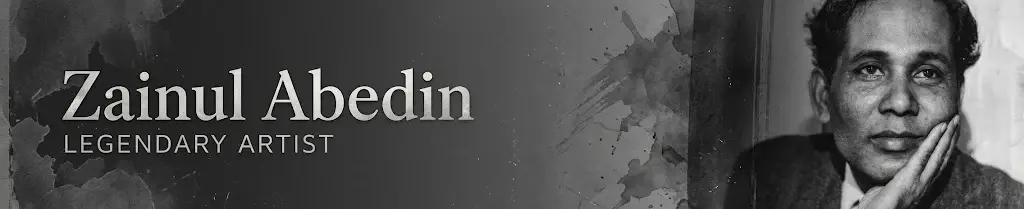

Zainul Abedin
Painting Artist,
National Heroes
Short Biography
Zainul Abedin (29 December 1914 – 28 May 1976) was a legendary Bangladeshi painter, art educator, and cultural pioneer. Popularly known as Shilpacharya, he is regarded as one of the founding figures of modern art in Bangladesh. He became internationally recognized for his powerful sketches of the Bengal Famine of 1943. In 1948, he established the Government Institute of Arts and Crafts in Dhaka, which later became the Faculty of Fine Arts at the University of Dhaka. His notable works include the Bengal Famine Sketches and Nabanna. He received several honors for his contribution to art and culture. Zainul Abedin passed away on 28 May 1976, but his artistic legacy continues to inspire generations of Bangladeshi artists.
Detail Biography
Zainul Abedin was one of the most influential painters in the history of Bangladesh. Popularly known as Shilpacharya (the Great Master of Art), he played a major role in developing modern art in the country. He was famous for his powerful paintings, realistic drawing style, and artistic representation of ordinary people's lives. His artwork reflected social struggles, human suffering, rural traditions, and the natural beauty of Bengal. Born on 29 December 1914, Zainul Abedin became a respected artist whose contribution to Bangladeshi culture and fine arts remains unforgettable. His famous paintings of the Bengal Famine of 1943 brought him international recognition. Through his dedication and creativity, he inspired generations of artists and helped establish a strong foundation for modern art education in Bangladesh. Early Life and Education Zainul Abedin was born on 29 December 1914 in Kishoreganj, which was then part of British India and is now in Bangladesh. He spent much of his childhood in Mymensingh, where the natural surroundings, rivers, villages, and everyday lives of ordinary people influenced his artistic imagination. From an early age, he showed a strong interest in drawing and painting. His passion for art encouraged him to pursue formal education in the field. He studied at the Government School of Art in Calcutta, where he developed his artistic knowledge and technical skills. During his student years, Zainul Abedin showed remarkable talent. His dedication to learning and his interest in realistic representation helped him develop a distinctive artistic style. His early experiences became an important foundation for his future success. Career as a Painter Zainul Abedin began his professional journey as an artist and art teacher. He became widely recognized for his exceptional drawing skills and his ability to represent real-life situations through paintings. His artwork was different because he focused on ordinary people, rural life, poverty, and social realities. Instead of painting only beautiful landscapes or traditional subjects, he often highlighted the struggles and emotions of common people. One of the most important periods of his artistic career came during the Bengal Famine of 1943. At that time, millions of people suffered from hunger, poverty, and extreme hardship. Zainul Abedin created a series of powerful sketches showing starving people, helpless families, and the terrible conditions of famine victims. These famine sketches became some of his most famous works. They demonstrated how art could communicate human suffering and raise awareness about important social issues. Famous Paintings and Artwork Zainul Abedin created many remarkable paintings and drawings throughout his career. His artistic works reflected the culture, history, and social conditions of Bengal. Some of his most notable works and artistic contributions include: Bengal Famine Sketches (1943): A powerful series of drawings showing the suffering of famine victims. Nabanna (1969): A significant scroll painting inspired by the lives and struggles of rural people in Bengal. Santal Life: Artwork reflecting the lifestyle, culture, and traditions of indigenous communities. Rural Bengal: Paintings and sketches capturing village life, nature, and ordinary people. River and Nature Paintings: Artistic representations of the rivers, landscapes, and natural beauty of Bengal. His paintings are admired for their emotional depth, realistic presentation, and strong connection to society. Contribution to Modern Art in Bangladesh Zainul Abedin was not only a talented painter but also an important art educator and cultural leader. One of his greatest achievements was establishing the Government Institute of Arts and Crafts in Dhaka in 1948. Today, this institution is known as the Faculty of Fine Arts at the University of Dhaka. His initiative created new opportunities for art education and helped develop a generation of talented Bangladeshi artists. He believed that art should be connected to people's lives, culture, and society. His vision helped introduce modern artistic practices while preserving the cultural identity of Bengal. After Bangladesh gained independence in 1971, Zainul Abedin continued contributing to the development of national culture and art. He also played an important role in establishing the Bangladesh Folk Art and Crafts Foundation at Sonargaon in 1975. Awards and Achievements Throughout his lifetime, Zainul Abedin received recognition for his outstanding contribution to painting and art education. Some of his notable achievements include: Shilpacharya: He earned this respected title for his extraordinary contribution to art. President's Award for Pride of Performance: He received this recognition in 1958 for his contribution to the arts. Hilal-i-Imtiaz: He was honored with this prestigious award by Pakistan in 1969. Independence Day Award: He received Bangladesh's highest civilian award posthumously in 1977. Founder of Modern Art Education in Bangladesh: His establishment of the Government Institute of Arts and Crafts in 1948 became a milestone in the country's art history. His achievements helped establish him as one of the most respected figures in South Asian art. Personal Life Zainul Abedin dedicated much of his life to painting, teaching, and promoting art and culture. He was known for his disciplined lifestyle, creative thinking, and commitment to artistic development. He believed that art should represent society and communicate meaningful messages. His work reflected his deep connection with the people, traditions, and natural environment of Bengal. Although he passed away on 28 May 1976 in Dhaka, his artistic legacy continues to influence painters, students, researchers, and art lovers. Legacy of Zainul Abedin Zainul Abedin holds a special place in the history of Bangladeshi art. His paintings of the Bengal Famine remain important examples of socially conscious artwork. His contribution to art education helped create a strong foundation for future generations of artists. Today, his artworks are preserved and displayed in important art institutions, including the Zainul Abedin Sangrahashala in Mymensingh. The museum celebrates his life, artistic journey, and contribution to the cultural heritage of Bangladesh. His birthday is remembered by art lovers, students, and cultural organizations across the country. His name remains closely connected with the growth of modern painting in Bangladesh. Zainul Abedin was more than a famous painter. He was a visionary artist, dedicated teacher, and cultural pioneer. His paintings captured the reality of society and gave a powerful voice to ordinary people. His contribution to Bangladeshi art will continue to inspire future generations.
Popular Dialogues
• "এখন তো চারিদিকে রুচির দুর্ভিক্ষ! একটা স্বাধীন দেশে সুচিন্তা আর সুরুচির দুর্ভিক্ষ!" ("Now there is a famine of taste everywhere! A famine of good thought and good taste in an independent country!") — his famous remark lamenting cultural decline after independence. • "একজন বড় শিল্পী হওয়ার উচ্চাকাঙ্ক্ষা আমার ছিল না, তবে আমি সর্বদা অন্য মানুষের মতো একজন মানুষ হতে চেয়েছি।" ("I did not have the ambition to become a great artist, rather I always wanted to be a human being like other human beings.")
Injury History
No major physical injuries are publicly documented (he suffered from lung cancer later in life, which led to his passing in 1976).
Tattoos & Body Art
None (he had no known tattoos).
Zainul Abedin
Also known as: Shilpacharya, Great Teacher of the Arts, Zainul Abidin.
National Heroes