
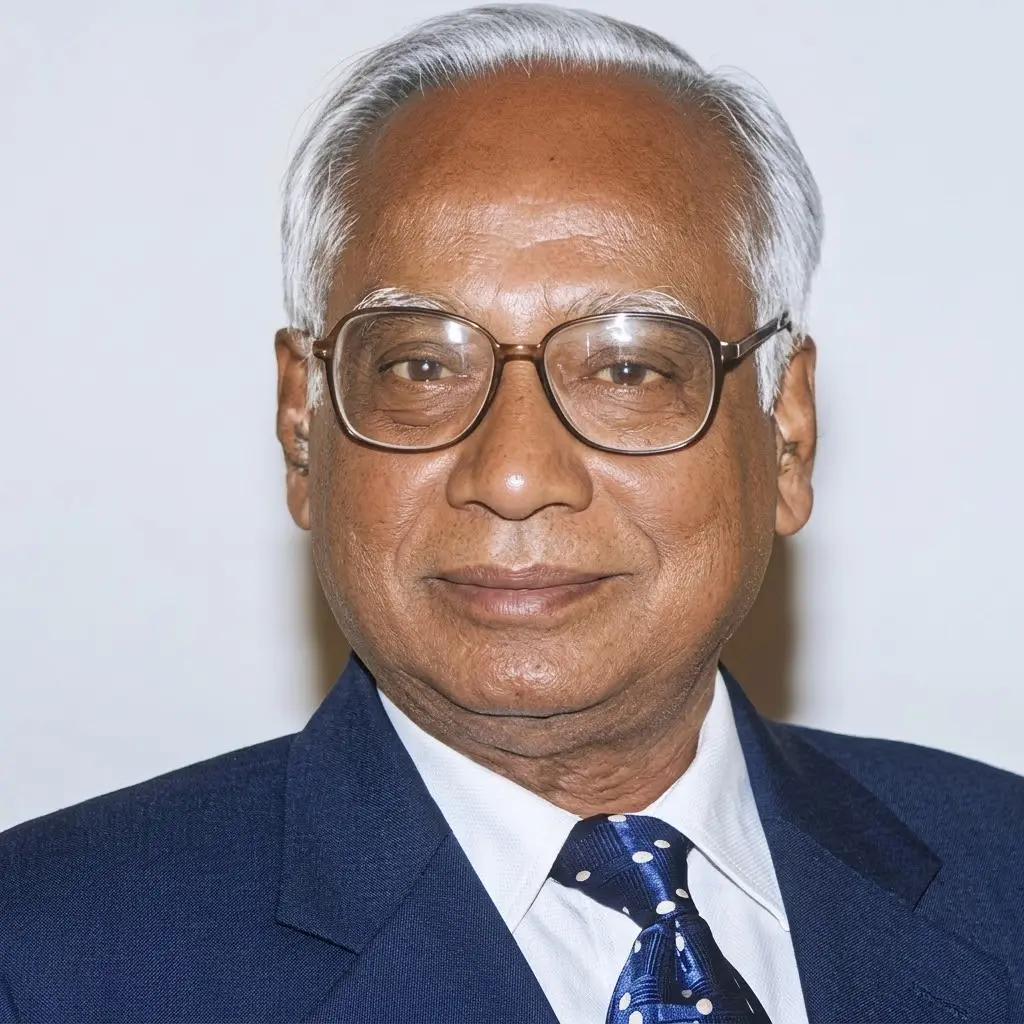
Iajuddin Ahmed
Politician,
Short Biography
Iajuddin Ahmed (1 February 1931 – 10 December 2012) was a prominent Bangladeshi politician, academic, and soil scientist who served as the President of Bangladesh from 2002 to 2009. Born in Nayagaon, Bikrampur, in present-day Munshiganj District, he earned his degrees from the University of Dhaka and the University of Wisconsin in the United States. Before becoming president, he served as a professor at the University of Dhaka, chairman of the Bangladesh Public Service Commission, and chairman of the University Grants Commission. He also served as Chief Adviser of Bangladesh's caretaker government during the political crisis of 2006–2007. His career combined academic leadership, public administration, and national political responsibilities.


Detail Biography
Iajuddin Ahmed was a prominent Bangladeshi academic, soil scientist, educationist, and statesman who served as the President of Bangladesh from 2002 to 2009. Born on 1 February 1931 in Nayagaon, Bikrampur, in present-day Munshiganj District, Bangladesh, he built a distinguished career in higher education before entering important public and constitutional positions. His life reflected a combination of academic achievement, educational leadership, and involvement in the political affairs of Bangladesh. Early Life and Education Iajuddin Ahmed was born into a Bengali Muslim family and demonstrated an interest in education from an early age. He completed his matriculation at Munshiganj High School in 1948 and attended Haraganga College, where he completed his intermediate education in 1950. He subsequently studied at the University of Dhaka, earning a Bachelor of Science degree in 1952 and a master's degree in 1954. Seeking advanced academic qualifications, he travelled to the United States and obtained further master's and doctoral degrees in soil science from the University of Wisconsin. He completed his PhD in 1962, establishing a strong academic foundation for his future career. Academic Career and Contributions After completing his higher education, Iajuddin Ahmed joined the University of Dhaka in 1963 as an assistant professor in the Department of Soil Science. He later became a professor and held several important academic and administrative positions. During his university career, he served as chairman of the Department of Soil Science, provost of Salimullah Muslim Hall, and dean of the Faculty of Biological Sciences. His work in soil science and university education contributed to his reputation as an experienced academic and administrator. His academic interests also extended beyond Bangladesh. He served as a visiting professor at international institutions, including Cornell University in the United States. His educational background and university leadership helped prepare him for subsequent responsibilities in public administration. Political Career and Presidency of Bangladesh Iajuddin Ahmed entered national public service through several significant appointments. In 1991, he served as an adviser to the caretaker government and subsequently became chairman of the Bangladesh Public Service Commission, holding the position from 1991 to 1993. He later served as chairman of the University Grants Commission from 1995 to 1999, contributing to the administration and development of higher education. On 6 September 2002, Iajuddin Ahmed assumed office as President of Bangladesh. He held the presidency until 12 February 2009, making his tenure a significant period in the country's political history. His presidency coincided with major political developments and challenges. In October 2006, he also assumed the role of Chief Adviser of Bangladesh's caretaker government while serving as president. His dual responsibilities during the political crisis of 2006–2007 made his administration an important subject in discussions of Bangladesh's democratic institutions and constitutional history. Role in Higher Education In addition to his public service, Iajuddin Ahmed maintained an interest in higher education. He was associated with the establishment of Atish Dipankar University of Science and Technology, a private university founded in Bangladesh in 2004. His professional journey from university teaching to senior public office demonstrated the connection between academic expertise and national administration. His work across educational institutions and public bodies formed a major part of his professional legacy. Awards and Recognition Iajuddin Ahmed received recognition for his contributions to education and academic life. Among his honours was the Ekushey Padak, which he received in 1995 in recognition of his contribution to education. His other reported awards included the Ibrahim Memorial Gold Medal and the Sri Gyan Atish Dipankar Gold Medal. These honours reflected his long association with academic institutions and his work in the education sector. Personal Life and Death Iajuddin Ahmed was born on 1 February 1931 and died on 10 December 2012 in Bangkok, Thailand, at the age of 81. He was married to Anwara Begum, a fellow academic. His life spanned a period of considerable political and institutional change in Bangladesh. His career remains notable for the transition from scientific research and university administration to national leadership. Although his presidency was marked by significant political controversy, his broader professional life included decades of work in higher education, public administration, and national affairs. Legacy of Iajuddin Ahmed Iajuddin Ahmed remains a notable figure in Bangladesh's political and academic history. As a former president, university professor, soil scientist, and education administrator, he occupied several influential positions throughout his career. His biography provides insight into the relationship between education, public service, and constitutional leadership in Bangladesh. For readers interested in Bangladeshi presidents, prominent political figures, and influential academics, his life offers an important historical perspective. Quick Biography of Iajuddin Ahmed Full Name: Iajuddin Ahmed Date of Birth: 1 February 1931 Birthplace: Nayagaon, Bikrampur, Munshiganj, Bangladesh Date of Death: 10 December 2012 Age at Death: 81 years Nationality: Bangladeshi Profession: Politician, Academic, Soil Scientist, Educationist Famous For: Serving as President of Bangladesh from 2002 to 2009 Presidential Term: 6 September 2002 – 12 February 2009 Chief Adviser: Bangladesh caretaker government, 2006–2007 Education: University of Dhaka; University of Wisconsin Spouse: Anwara Begum Award: Ekushey Padak (1995, Education) Place of Death: Bangkok, Thailand Iajuddin Ahmed's life and career represent an important chapter in the history of Bangladesh's presidency, higher education, and public administration.
Popular Dialogues
The 2007 Emergency Address: His televised speech on January 11, 2007, where he formally announced his resignation as Chief Adviser and the declaration of a state of emergency to "ensure a free, fair, and acceptable election". His phrasing during this national crisis became defining moments of his political legacy. Note on Confusion: In Bangladesh, famous historical political quotes (such as "The soil of Bangladesh is sovereign...") belong to Tajuddin Ahmad, the first Prime Minister of Bangladesh during the 1971 Liberation War. People frequently confuse the two due to the similarity of their names, but Iajuddin Ahmed’s public speaking style was strictly restricted to bureaucratic and academic terminology
Controversy
Self-Appointment as Chief Adviser: In late October 2006, after the ruling BNP and opposition Awami League failed to agree on a neutral leader for the interim caretaker government, Ahmed took the highly controversial step of swearing himself in as the Chief Adviser while remaining the President. The opposition heavily criticized this, claiming he could not remain neutral. The 1-11 Crisis (State of Emergency): His interim administration faced severe political gridlock, street violence, and allegations of operating with a heavily flawed voter list (which reportedly contained millions of fake names). Under immense pressure from the military and international community, he resigned as Chief Adviser on 11 January 2007 (known in Bangladesh as the "1/11" event). He declared a military-backed state of emergency, postponed elections, and paved the way for a military-backed interim government. Critics and historians argue that he failed to maintain his constitutional neutrality by giving in to undue political and military pressures.
Injury History
Medical Complications: There are no public records of Dr. Ahmed suffering any major physical injuries or accidents during his lifetime. However, his health severely declined in his later years due to chronic conditions. He underwent major bypass heart surgery on October 28, 2012, in Bangkok, after which he developed critical kidney complications and remained on life support until his death on December 10, 2012
Tattoos & Body Art
None: Dr. Iajuddin Ahmed did not have any tattoos. Tattoos are uncommon and generally discouraged within conservative Bangladeshi Muslim academic and political circles of his generation.
Iajuddin Ahmed
Also known as: Professor Dr. Iajuddin Ahmed, IA Ahmed, ইয়াজউদ্দিন আহম্মেদ (Bengali spelling